Between Two Sizes in a Workout Top? Here Is How to Decide
Quick Answer: When you are between sizes, let the fabric decide. Size down in high-elastane compression fabrics and anything with a built-in bra, because the support depends on tension and a loose one does nothing. Size up in low-stretch woven or cotton-blend tops, cropped styles you need length in, and anything you will layer. Then check the three fit points that actually predict comfort: the underarm seam, the shoulder strap tension when your arms go overhead, and whether the hem stays put through a full range of motion.
The tag says medium fits up to a number you are exactly on. That number tells you almost nothing.

Why does the same size fit completely differently across brands?
Because activewear sizing is built around fabric behavior, not body measurement, and brands make wildly different fabric choices.
A top with 18 to 22 percent elastane is engineered to be worn stretched. Its unstretched measurements are deliberately smaller than your body, and the fit only makes sense under tension. A top with 5 percent elastane in a jersey knit is designed to skim, so its measurements are close to true.
Then there is intended use. A studio brand cuts for a body that will be inverted and folded. A running brand cuts for repeated arm swing and minimal fabric contact. A lifestyle athleisure brand cuts for looking good standing still, which is a genuinely different pattern.
This is why your size in one brand predicts nothing about another, and why the size chart is only useful in combination with the fabric composition on the label. Read the composition before you read the chart. It is the single most informative thing on the garment.
When should you size down?
High elastane content, 15 percent or more. These fabrics require tension to do their job. A compression top one size too large does not compress, it bunches — and bunching under a sports bra band is the most common source of mid-workout irritation.
Anything with a built-in bra or shelf. This is the strongest case. The support in a built-in comes from the band tension against your ribcage. Size up and the band sits loose, which means no support, ride-up during any jumping, and the shelf rolling under the bust. If you are between sizes with a built-in, size down almost always.
Tops you will wear for high-impact activity. Running, HIIT, jump rope. Less fabric movement means less chafe and less distraction.
Long-line or fitted tank styles where the whole point is a clean line. A loose fitted top reads as ill-fitting rather than relaxed.
The check: put it on and raise both arms straight overhead. If the hem lifts more than an inch or two and stays lifted, it is too small even by the size-down rule. That is a different problem from snugness.
When should you size up?
Low-stretch fabrics. Cotton blends, modal, anything under 8 percent elastane. These do not recover well after being stretched, so a tight fit gets permanently distorted and the seams strain.
Cropped styles. Crop length varies enormously and sizing up buys length as well as width, which is often the fix when a top is nearly right but sits an inch too high.
Anything you layer. A base layer that fits perfectly alone will feel restrictive under a jacket, especially with a shoulder seam already sitting at the edge of your shoulder.
Woven fabrics with no stretch at all, which appear in running singlets and some yoga tops. There is no give to grow into.
Sensory comfort. If tight fabric across the chest or ribs distracts you, that is a real fit criterion and not a small one. A top you keep adjusting is a top you stop wearing.
One more: if you are between sizes and the smaller one only works when you are standing still, it does not fit. Activewear should fit in the position you will actually be in, which is rarely upright and relaxed.
5 Fit Checkpoints Everyone Skips
1. The underarm seam. Reach across your body as if grabbing a seatbelt. The seam should not dig or bunch into the armpit. This one predicts chafing better than any other single check, especially in humid weather.
2. Overhead hem lift. Raise both arms. Some lift is normal. A hem that rises and stays there means the top is either too short or too narrow through the shoulders.
3. Strap tension at full stretch. With arms overhead, straps should not cut. Racerback designs concentrate load at the upper back, and a strap that marks your skin at rest will genuinely hurt at minute thirty.
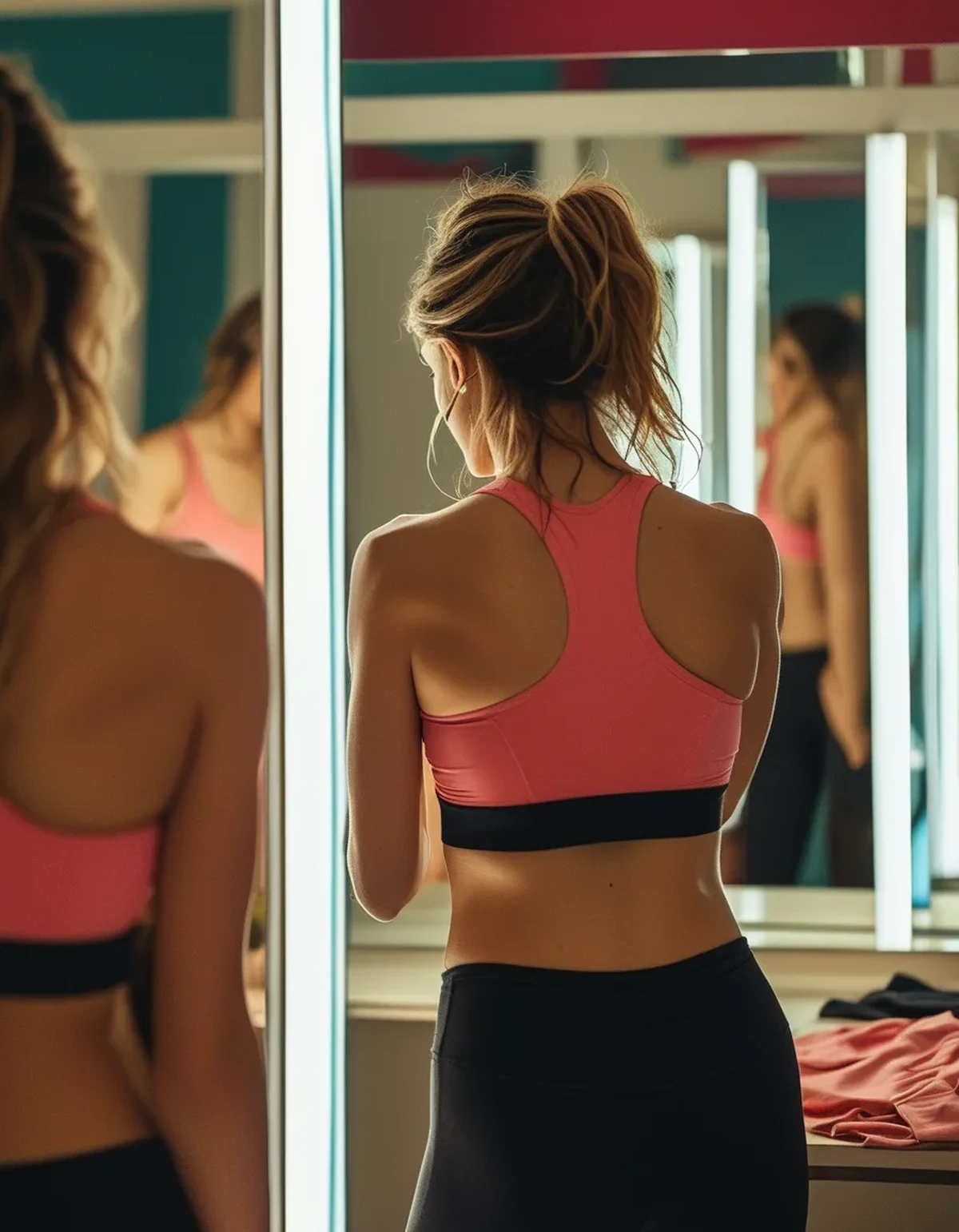
4. The bend-over test. Fold forward. The neckline should stay where it belongs and the back hem should not ride up past your waistband. Almost nobody checks this in a fitting room and almost everybody discovers it in a class.
5. The band roll. For built-in bras, jump lightly ten times. If the band rolls up under the bust even slightly, it will roll fully once you sweat. Sweat is a lubricant and it makes every marginal fit worse.
FAQ: Workout Top Sizing Questions, Answered
Does activewear stretch out over time?
Quality elastane blends recover well for a long time, but everything loosens somewhat, especially at the band and cuffs. Factor in a little: a top that is barely acceptable when new will be too loose in three months. This is another argument for sizing down in stretchy fabrics.
Should I size by bust or by ribcage?
For anything with a built-in bra, ribcage is the more important measurement, because that is where support comes from. For a plain tank or tee, bust matters more for how it drapes.
Is a compression top supposed to feel tight?
Snug and evenly distributed, yes. Restrictive breathing, digging seams, or numbness are not compression, they are the wrong size. You should be able to take a full deep breath without any sense of a limit.
What if the two sizes fit differently in different places?
Common, and usually resolved by choosing the size that fits the shoulders and ribcage, then accepting looseness elsewhere. Shoulders and band are the structural fit points; the waist is cosmetic on most tops.
TL;DR:
- Fabric composition tells you more than the size chart — read it first.
- Size down for high elastane, built-in bras, and high-impact use; support depends on tension.
- Size up for low-stretch or woven fabrics, cropped lengths, and anything you will layer.
- Check five things: underarm seam, overhead hem lift, strap tension, the bend-over test, and band roll after ten jumps.
- Fit for the position you will actually be in, not for standing still in a mirror.
Most sizing regret comes from choosing based on a number rather than a fabric. Spend the extra sixty seconds on the checkpoints in the fitting room and you will stop owning tops you never wear.
See It in Motion
Seen here: Round Neck Long Sleeve Athletic T-Shirt — shop it on bubblelime.com
Keep Reading
This article is for general informational and styling purposes only. Fit, sizing, and product availability may vary.