How to Choose a Workout Top That Actually Works as a Cold-Weather Base Layer
Quick Answer: A workout top doubling as a cold-weather base layer needs to prioritize moisture-wicking and a close (not tight) fit over insulation itself, since the base layer’s job is moving sweat away from skin so outer layers can trap warmth — a bulky or overly insulating base layer actually traps moisture and makes you colder once you stop moving.
The instinct in cold weather is to reach for your warmest top as a base layer, but the base layer’s real job isn’t warmth — it’s moisture management, and getting that backwards is why so many cold-weather workouts end with a clammy, chilled torso.
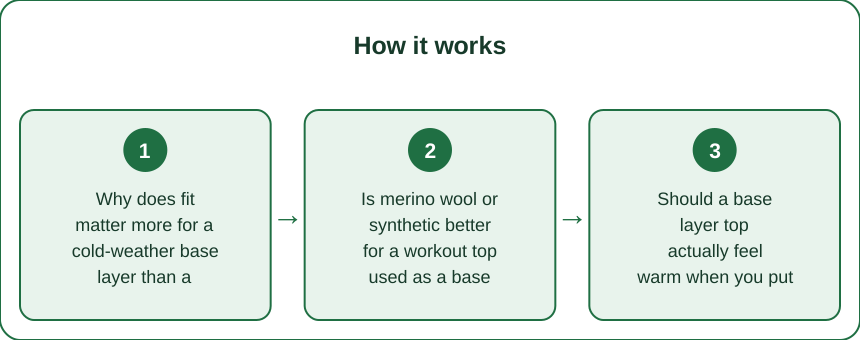
Why does fit matter more for a cold-weather base layer than a regular workout top?
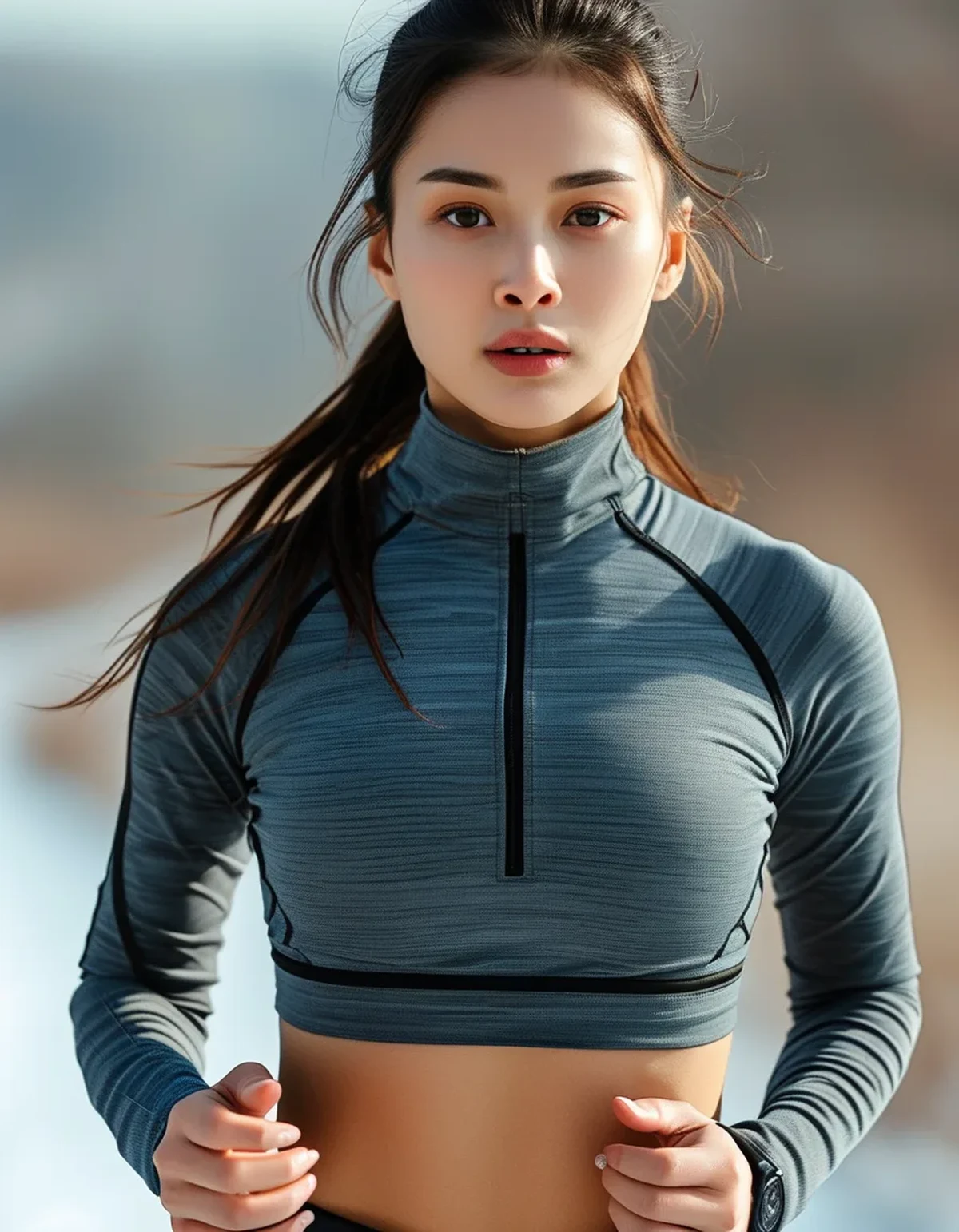
A close, non-baggy fit keeps the fabric in direct contact with skin, which is what allows moisture-wicking fibers to actually pull sweat away efficiently — a loose top creates air gaps where sweat can sit against skin rather than transferring to the fabric, which becomes a real problem the moment you slow down or stop and that trapped moisture starts to cool.
Is merino wool or synthetic better for a workout top used as a base layer?
Both work well but for different scenarios — merino wool manages odor better over multi-hour or multi-day use and maintains some insulating value even damp, making it strong for longer cold-weather activities, while synthetic (polyester or nylon blends) typically dries faster and wicks moisture more aggressively during high-intensity efforts, making it often better suited to interval-heavy or high-sweat workouts.
Should a base layer top actually feel warm when you put it on?
Not necessarily, and that’s counterintuitive for a lot of people — a good base layer often feels cool or neutral at rest because it’s thin and designed for moisture management, not insulation on its own; the warmth comes from the layering system as a whole (base, insulating mid-layer, wind or weather-resistant outer layer) working together, not from any single piece.
What Nobody Tells You About Base Layer Thickness for Different Activities
Higher-intensity activities (running, cycling) generally do better with a thinner, more aggressively wicking base layer, since the activity itself generates significant body heat, while lower-intensity cold activities (winter hiking at an easy pace, standing around at outdoor events) benefit from a slightly heavier-weight base layer since there’s less internal heat generation to rely on. Using the same base layer weight for both scenarios is a common mismatch that leaves people either overheating or under-insulated.
FAQ: Cold Weather Workout Top Base Layers Questions, Answered
Can a cotton workout top work as a cold-weather base layer in a pinch?
It’s not ideal — cotton absorbs and holds moisture rather than wicking it away, which means it stays wet against skin and can actually make you colder than having no base layer at all once you stop moving.
How do I know if my base layer top is too tight versus properly fitted?
A properly fitted base layer should feel snug without restricting breathing or movement — if it’s noticeably compressing or leaving deep marks on skin, it’s likely too tight for effective moisture transfer.
Does color matter for a cold-weather base layer top?
Not meaningfully for warmth or performance — color choice for a base layer is really about visibility and personal preference rather than any functional difference in insulation or wicking.
TL;DR:
- A base layer’s real job is moisture-wicking, not warmth — that’s the outer layers’ job
- A close, non-baggy fit is what actually lets moisture-wicking fabric do its job effectively
- Merino suits longer, lower-sweat cold activities; synthetics suit high-intensity interval work
- Match base layer weight to activity intensity, not just outdoor temperature alone The warmest-feeling top in the store isn’t automatically the best cold-weather base layer — the one that manages moisture correctly is what actually keeps you warm once you’re twenty minutes into the workout.
See It in Motion
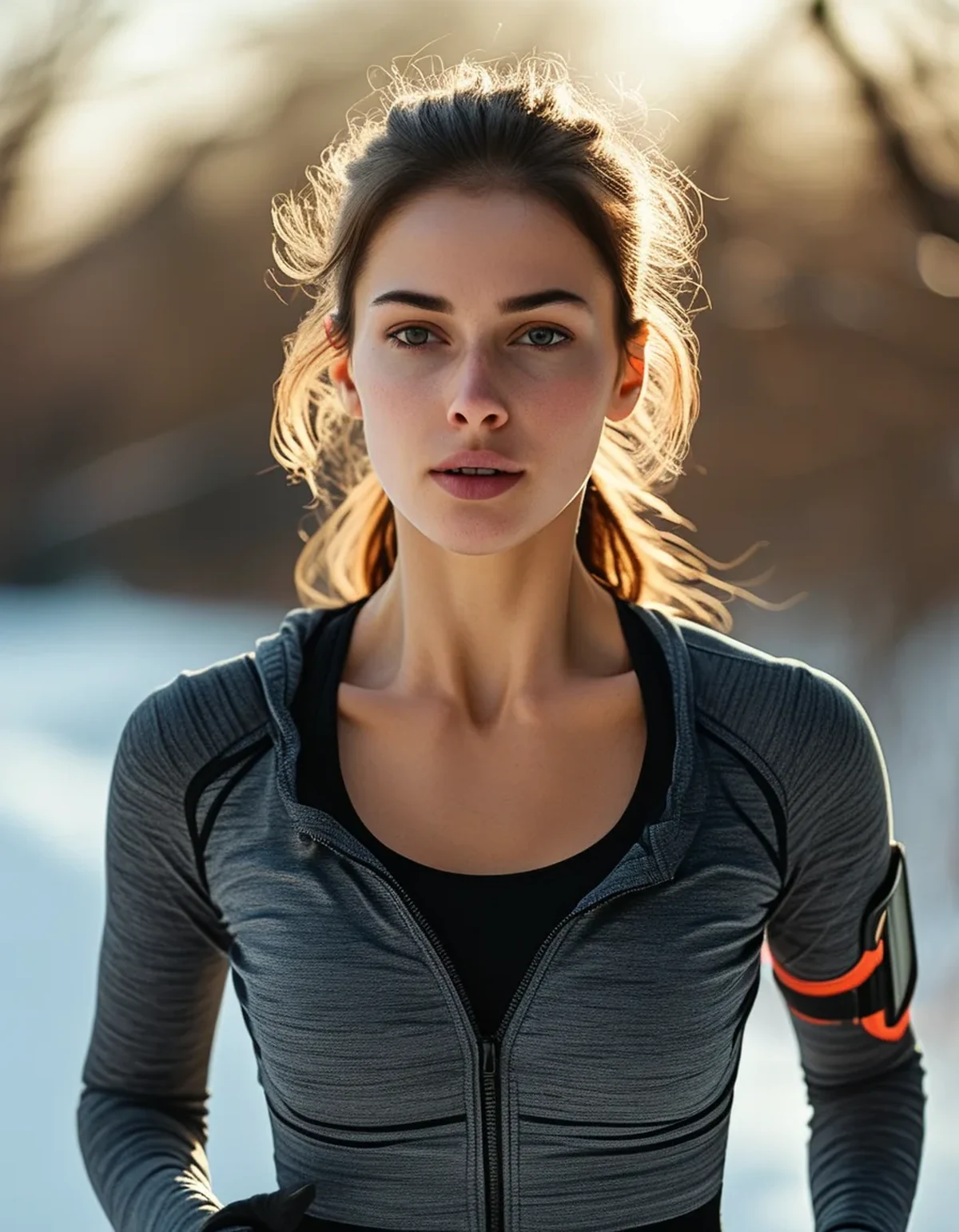
Seen here: Round Neck Long Sleeve Athletic T-Shirt — shop it on bubblelime.com
Keep Reading
This article is for general informational and styling purposes only. Fit, sizing, and product availability may vary.