Why Your Workout Top Rides Up Every Time You Reach Overhead
Quick Answer: Tops ride up during overhead movement because your torso lengthens when your arms lift - roughly 2 to 3 inches at the front. The fix isn’t a longer top, it’s construction: a curved dropped hem, a raglan or set-in sleeve rather than a dolman, some elastane in the fabric, and a hem that isn’t tighter than the chest.
You set up, press overhead, and your top climbs to your ribs. You pull it down between reps. By set four you’re spending more attention on the shirt than the weight. Buying a longer version usually doesn’t fix it, which tells you the problem isn’t length.
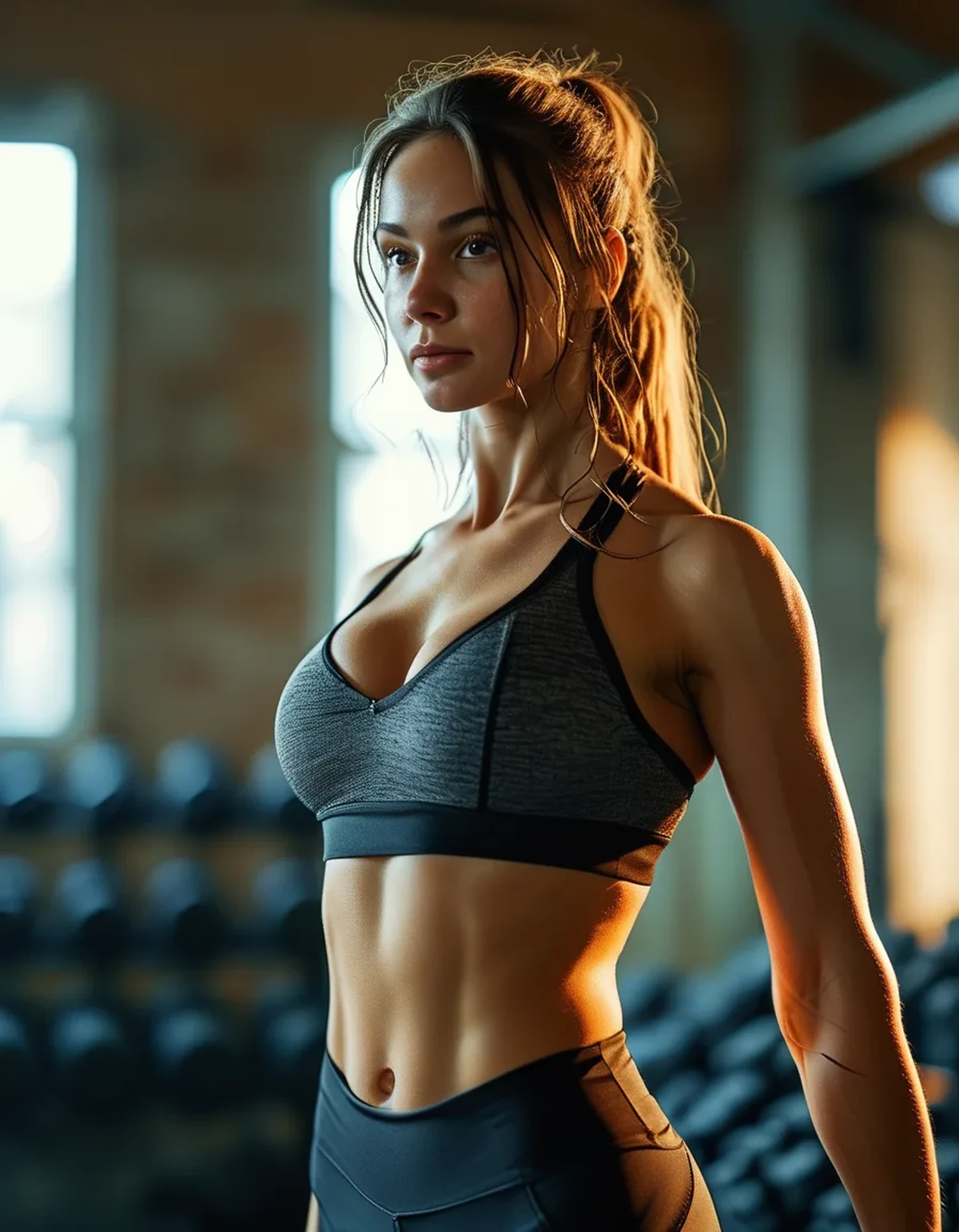
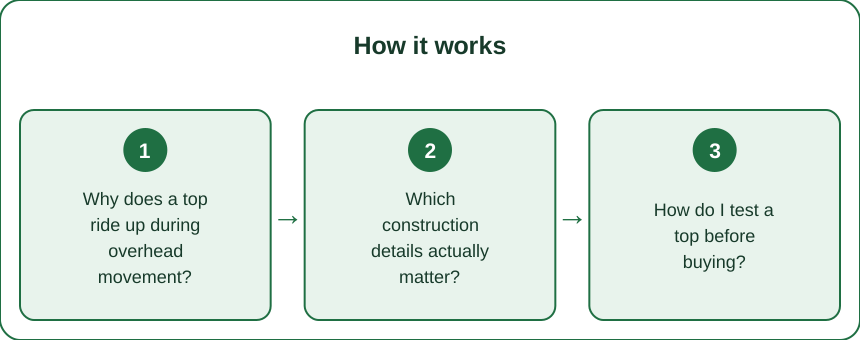
Why does a top ride up during overhead movement?
When you raise your arms overhead, your ribcage lifts and rotates, and the distance from your shoulder seam to your hip increases at the front of your body - typically 2 to 3 inches for a full overhead reach.
A garment that fits at rest has to find that fabric somewhere. It comes from the hem, which travels up.
That’s the physics, and no top escapes it entirely. What varies enormously is whether the hem comes back down when your arms lower, which is where construction decides everything.
The key insight: a top that rides up and settles back is fine. A top that rides up and stays up is the one that ruins a session, and that’s a friction and fit problem rather than a length problem.
Which construction details actually matter?
1. Hem shape. A straight, level hem is the worst performer. A curved hem that drops lower at the front and back gives you the extra 2-3 inches exactly where the lengthening happens, without adding bulk at the sides.
2. Sleeve construction. Dolman and batwing sleeves are the biggest offenders - because the sleeve is cut continuously with the body, raising your arm pulls fabric directly from the hem. Raglan and set-in sleeves isolate the arm movement much better. If a top rides up dramatically, check the sleeve seam first.
3. Fabric stretch and recovery. A fabric with 8-15% elastane stretches to accommodate the reach and pulls back down afterward. A 100% cotton or a low-stretch poly jersey has to migrate instead, and it stays where it migrated.
4. Hem-to-chest ratio. If the hem opening is narrower than your chest measurement, it has to climb over the widest part of your torso and then it’s mechanically stuck up there. This is the most common failure in cropped and fitted styles - the hem grips your ribs and simply doesn’t come back down.
5. Fabric slip. Very slick fabrics slide up easily but also slide back down easily. Grippy, textured fabrics resist the initial climb but hold their position once up. Neither is universally better - slick is generally more forgiving for overhead work.
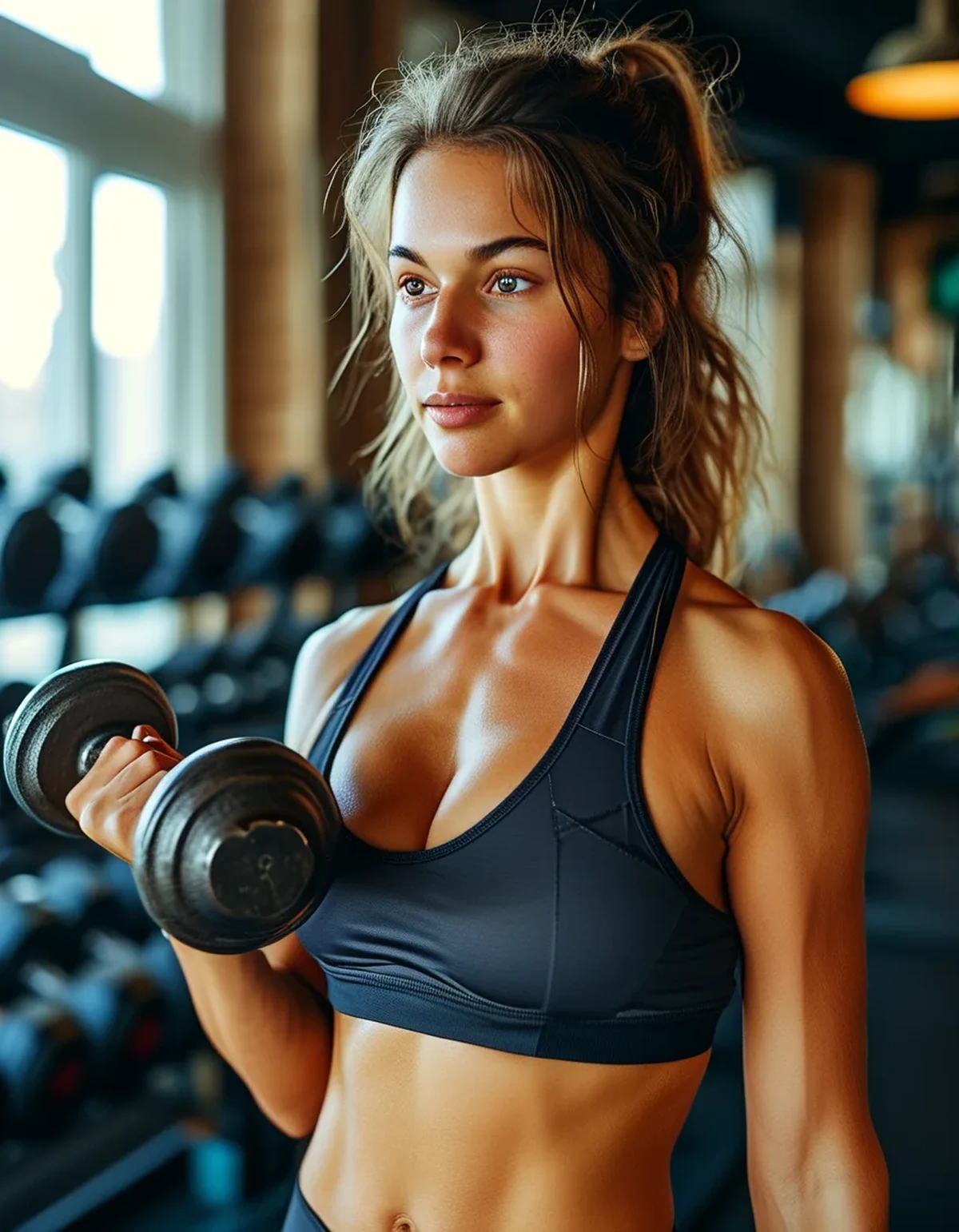
How do I test a top before buying?
Three checks that take fifteen seconds in a fitting room.
The reach test. Raise both arms straight overhead, hold for three seconds, and lower them. Watch the hem. If it comes back to within an inch of where it started, the top has good recovery. If it stays up at your ribs, it will do that all session.
The hem width check. Pinch the hem and stretch it out. It should stretch to comfortably clear your chest measurement. If it’s a struggle, that hem will grip.
The seam check. Look at where the sleeve meets the body. A seam running from armpit to shoulder is a set-in or raglan - good. No seam at all, with the sleeve cut as part of the body, means dolman - expect climbing.
Online buying: filter for ‘curved hem’ or ‘dropped back hem’ in the description, and look for elastane in the fabric composition. Product photos with arms raised are unusually informative and unusually rare.
5 Mistakes Everyone Makes With Riding-Up Tops
1. Buying a longer version of the same cut. If the problem is a dolman sleeve or a grippy narrow hem, adding two inches just means it rides up from a lower starting point. Same behavior, longer shirt.
2. Sizing up. A larger size has a wider hem, which helps, but it also has a longer shoulder-to-hem distance that hangs oddly and more fabric to bunch. Sizing up usually trades one annoyance for another.
3. Tucking it in. Works briefly, and then the tucked fabric bunches at your waistband and creates a lump under the leggings band. High-rise bottoms with a wide waistband hold a tucked hem better than anything else, if you must.
4. Blaming the leggings. A high-rise legging with a wide band actually helps a lot by giving the hem something to sit against. If your top rides up more with low-rise bottoms, that’s a real interaction, not your imagination.
5. Ignoring it in the fitting room because you’re standing still. Almost every top behaves well standing still. The reach test is the only one that matters and it takes three seconds.
FAQ: Workout Top Fit Questions, Answered
Do cropped tops ride up more or less?
Less distance to travel, but they hit the narrowest part of the ribcage sooner, so they often grip and stay. A cropped top with a genuinely relaxed hem opening is the best of both.
Does a built-in bra help hold the top down?
Usually the opposite - a built-in shelf bra anchors the top at your ribcage, so when your arms go up, the whole garment can shift as one piece. It depends heavily on the band’s grip.
Is there a fabric that just doesn’t do this?
A jersey with 10%+ elastane, a curved hem, and set-in sleeves comes close. As we head into layering season, a fitted long-sleeve base with those specs under a looser outer layer sidesteps the problem entirely - the base layer holds and the outer one can do whatever it likes.
TL;DR:
- Your torso lengthens 2-3 inches at the front during an overhead reach - every top rides up somewhat
- The question is whether it comes back down, which is construction, not length
- Look for a curved dropped hem, set-in or raglan sleeves, and 8-15% elastane
- A hem narrower than your chest will grip your ribs and stay there
- Test with a three-second overhead reach in the fitting room - it predicts everything
A longer version of the wrong cut is still the wrong cut.
See It in Motion
Seen here: Super High Waist Embossed Yoga Leggings with Inner Pocket — shop it on bubblelime.com
Keep Reading
This article is for general informational and styling purposes only. Fit, sizing, and product availability may vary.