Why Your Workout Top Pills Exactly Where the Backpack Sits
Quick Answer: Pilling is abrasion, and a backpack strap concentrates hours of low-level rubbing into two small zones. Synthetic fibres do not break off cleanly when they work loose, so they tangle into balls that stay attached. The fix is reducing friction at those two points rather than treating the whole garment: a smoother-faced fabric under the strap, a sternum strap to stop the shifting, and washing inside out on a gentle cycle to slow what has already started.
It is not a quality problem with the top. It is a location problem.
We have covered fabric care, seam placement and summer to autumn fabric swaps. This is the wear pattern that shows up on commuters and nobody else.

Why does synthetic fabric pill instead of just wearing thin?
Because of what happens to a fibre when abrasion works it loose.
Abrasion pulls short fibre ends to the surface. Every fabric does this; it is the first stage of wear in almost any textile.
Those loose ends tangle with each other under continued rubbing and roll into small balls, which is what a pill is.
Natural fibres are relatively weak and break off. Cotton pills form and then fall away, which is why cotton wears thin rather than fuzzy.
Polyester and nylon are extremely strong. The loose ends do not snap, so the pill stays anchored to the fabric by fibres that will not give.
Which means the pills accumulate rather than shedding. A polyester top pills more visibly than a cotton one even with less total abrasion.
And the softest fabrics pill fastest. Brushed and peached finishes have deliberately raised surface fibres, which is exactly what pilling needs to start.
Why does the backpack cause so much of it?
Because it combines every condition that produces abrasion.
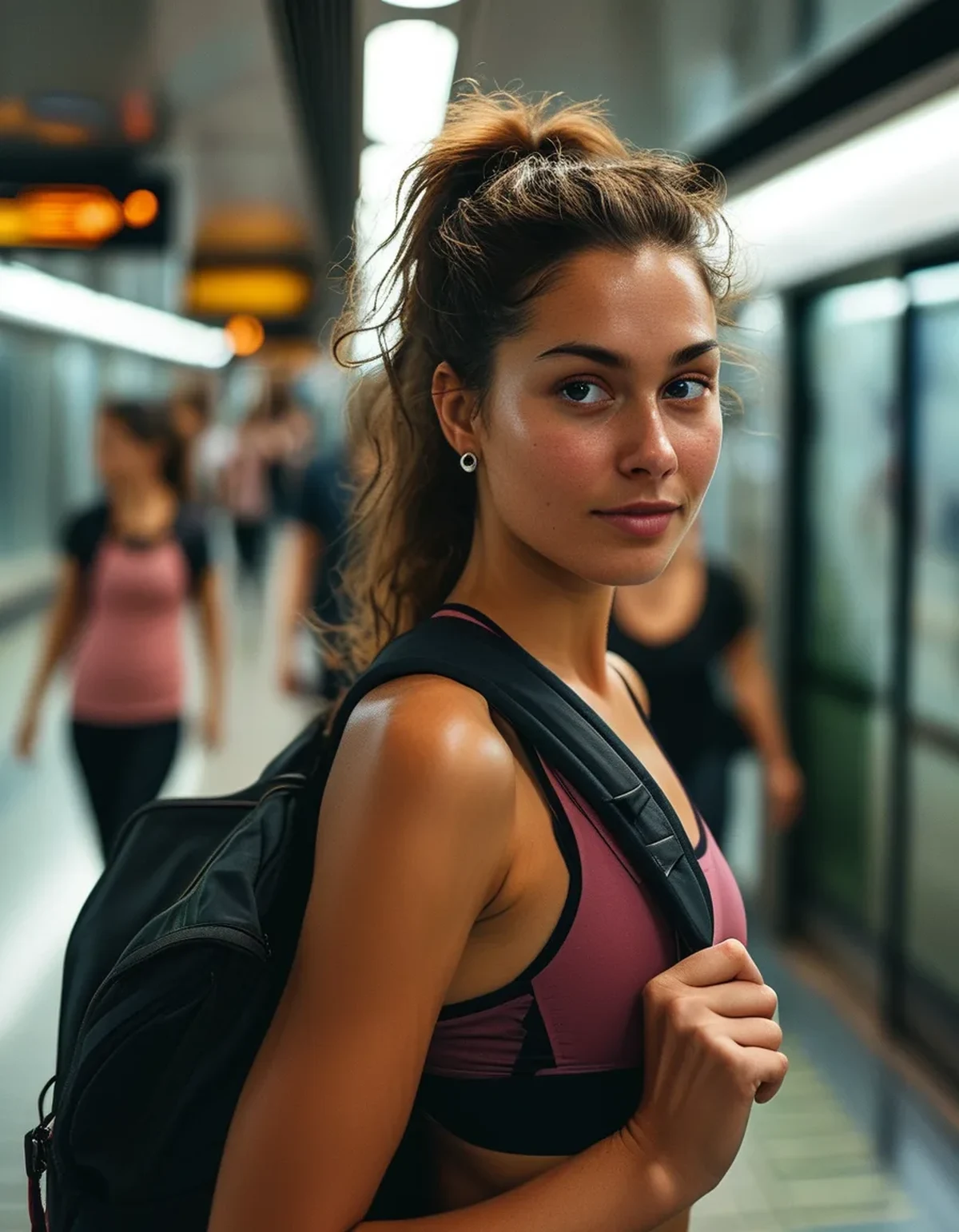
Constant contact under pressure. The strap presses fabric against skin and against itself, which is the mechanical setup for surface wear.
Continuous small movement. A backpack shifts a few millimetres with every step, which is thousands of tiny rubbing cycles over a commute.
Strap fabric is coarse. Most backpack webbing and padding is nylon designed for durability, not for gentleness against a knit.
Sweat lubricates and weakens. Damp fabric abrades more readily, and the shoulder under a strap is one of the least ventilated spots on the body.
Load concentrates in a narrow band. A ten kilo bag delivers its weight through maybe eight centimetres of strap on each side, which is why the pilled patch has such clear edges.
And the strap sits in the same place every day. No rotation, no variation, the same two zones on the same top, five days a week.
5 Mistakes That Make Pilling Worse
Mistake one: washing with towels and denim. Coarse fabrics in the same load abrade synthetics throughout the cycle. Wash activewear with other activewear and nothing rough.
Mistake two: washing right side out. Turning tops inside out puts the outer face against itself rather than against the drum and other garments, which is a genuine reduction in abrasion for zero effort.
Mistake three: fabric softener. It coats fibres and makes the surface more prone to catching, alongside all the other reasons to keep it away from activewear.
Mistake four: high spin speeds. The spin cycle is where most in-machine abrasion happens. Reducing the spin extends the life of a fitted top noticeably.
Mistake five: picking at the pills. Pulling them off takes fibre with them and thins the fabric further. A fabric shaver cuts them flush and does far less damage.
And the one specific to commuters: wearing the same top under the bag every day. Rotating two tops halves the exposure per garment without changing anything else, and it is the simplest fix available.
How to protect the shoulders specifically
Six changes, ordered by how much difference each makes.
Use the sternum strap. It stops the pack shifting side to side, which removes most of the movement that causes the abrasion in the first place. Most people have one and never clip it.
Tighten the shoulder straps properly. A loose pack swings and rubs; a snug one moves with you. Counterintuitively, tighter usually means less wear.
Wear a smoother layer under the strap on commute days. A flat-faced technical top, or a light shell over the workout top, takes the abrasion instead. This is the reason so many cyclists arrive in a jacket.
Rotate tops. Two tops used alternately last more than twice as long each, because fibre recovery between wears is real.
Wash inside out, cool, gentle, low spin, with no softener and nothing coarse in the load.
And use a fabric shaver on what has already pilled. It will not restore the fabric, and it makes the garment look considerably better and stops the pills from catching and growing.
One buying note: if you commute with a bag daily, a tighter knit with a flat face will outlast a brushed or peached finish substantially, even if the brushed one feels nicer in the shop. The softness comes from raised surface fibres, and raised surface fibres are what pill.
FAQ: Pilling Questions, Answered
Can you reverse pilling on activewear?
Not really, but you can remove it. A battery fabric shaver cuts the pills flush without pulling fibre out of the fabric, which restores the appearance. Picking or pulling them off removes fibre and thins the material further.
Does pilling mean the top is low quality?
Not necessarily. Softer, brushed finishes pill faster because they have raised surface fibres by design, and strong synthetics hold pills in place rather than shedding them. Localised pilling under a backpack strap is a friction pattern, not a manufacturing fault.
How should I wash workout tops to prevent pilling?
Inside out, cool, gentle cycle, low spin, no fabric softener, and only with other smooth synthetics. Towels, denim and anything with zips or hook-and-loop in the same load will abrade them throughout the wash.
TL;DR:
- Pilling is abrasion, and a backpack strap concentrates it into two small zones.
- Strong synthetic fibres do not shed the pills they form, so they accumulate visibly.
- Clip the sternum strap and tighten the shoulders — a pack that moves less rubs less.
- Wash inside out, cool and gentle, rotate two tops, and use a fabric shaver on what is already there.
The top is not failing. It is being sanded in two places for forty minutes a day.
See It in Motion
Seen here: UPF 50+ Short Sleeve Rashguard Swim Shirt — shop it on bubblelime.com
Keep Reading
This article is for general informational and styling purposes only. Fit, sizing, and product availability may vary.