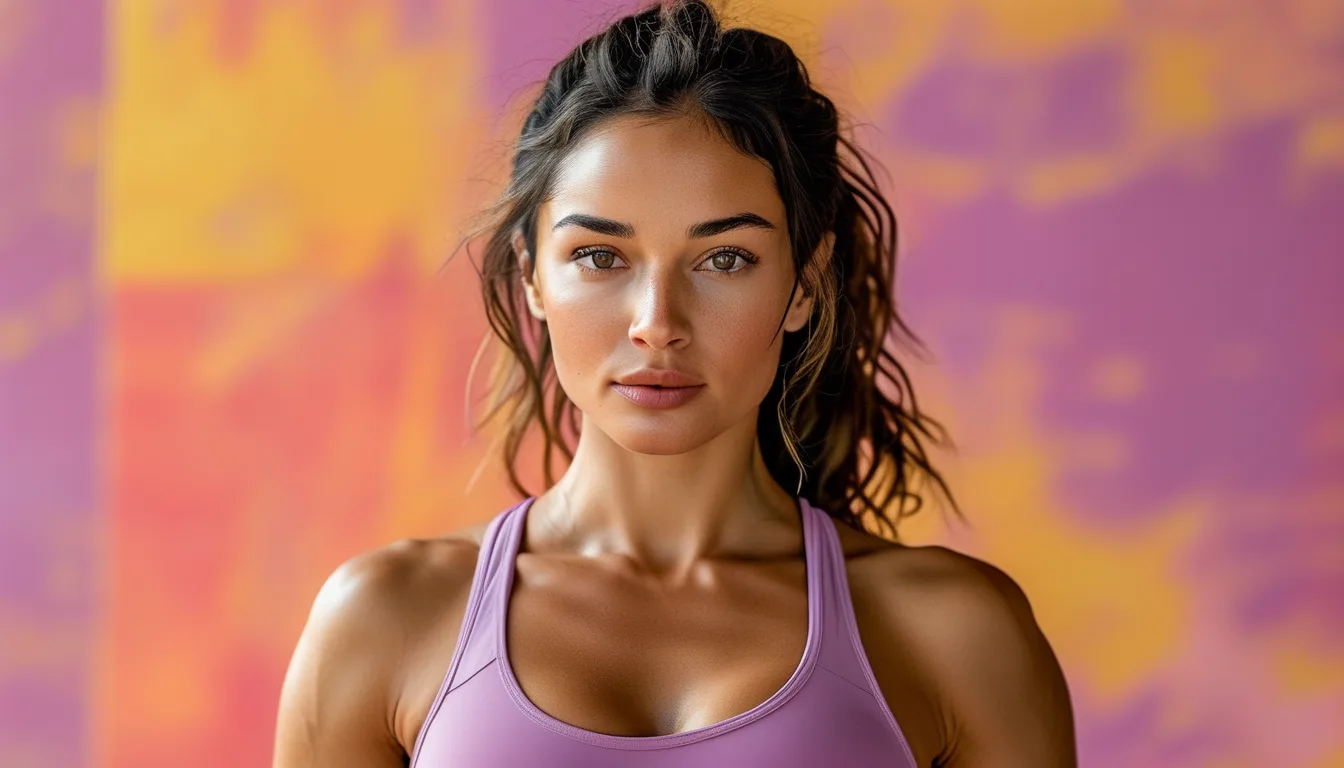
Racerback vs. Standard Straps: Which Workout Top Actually Suits Your Movement?
Quick Answer: Racerback straps stay put better during overhead and rotational movement (weightlifting, throwing sports) because they sit closer to the shoulder’s natural pivot point, while standard straps offer easier adjustability and work fine for movement that stays below shoulder height, like most cardio and lower-body training.
Strap style feels like a style choice until you’re mid-overhead-press and a standard strap is sliding off your shoulder. The right choice depends on what your workout actually asks your shoulders to do.

Why does racerback style help with overhead movement specifically?
The crossed-back design sits closer to the natural pivot point of the shoulder joint, so it moves with your arm during overhead and rotational motion instead of sliding outward the way a straight standard strap tends to. This matters most for weightlifting, throwing sports, and swimming-style movement patterns.
Where do standard straps actually have an advantage?
Adjustability. Standard straps typically allow fit customization, which matters for finding the right support level, especially for higher-impact chest support. Racerback styles are usually fixed, offering less room to fine-tune fit for different bra sizes underneath.

Does strap style affect anything besides staying in place?
Yes — breathability and tan-line coverage patterns differ between the two. Racerback styles expose more of the upper back, which some people prefer for heat regulation during intense sessions and others find less coverage than they want.
Myth vs Fact: Workout Top Strap Styles
Myth: Racerback is objectively ‘better’ for all workouts. Fact: It’s better specifically for overhead and rotational movement — for walking, cycling, or lower-body focused training, the difference is mostly aesthetic, not functional.
Myth: Standard straps always slide during any activity. Fact: Quality standard-strap tops with a secure, non-stretch strap material hold up fine for most non-overhead activity — sliding is more common with worn-out elastic than strap style itself.
Myth: You need to pick one style for your whole wardrobe. Fact: Most people benefit from having both — racerback for lifting and throwing sports, standard for cardio and lower-body days where adjustability matters more.
FAQ: Workout Top Strap Style Questions, Answered
Is racerback better for running?
Marginal difference for running specifically, since arms stay mostly below shoulder height — either style works fine; personal preference on coverage and breathability matters more here.
Do racerback tops work with all bra styles underneath?
Most racerback tops are designed with racerback bra compatibility in mind, but check that a standard-strap bra underneath doesn’t create visible strap conflict at the shoulder.
Which style is better for hot yoga or heated classes?
Racerback tends to be preferred for heat regulation due to more exposed back surface, though this comes down to personal comfort as much as function.
TL;DR:
- Racerback straps stay in place better for overhead and rotational movement
- Standard straps offer easier adjustability, useful for fine-tuning chest support
- The functional difference matters most for lifting and throwing sports
- Most people benefit from owning both styles rather than committing to just one
See It in Motion
Seen here: Crewneck Short Sleeve Workout T-Shirt — shop it on bubblelime.com
Keep Reading
This article is for general informational and styling purposes only. Fit, sizing, and product availability may vary.