Why Your Workout Top Still Smells After Washing - and How to Actually Fix It
Quick Answer: Synthetic activewear holds odour because polyester is oil-loving and water-hating - body oils and the bacteria feeding on them bind into the fibre where ordinary detergent and cold water never reach them. The smell hides until heat and moisture release it, which is why a clean top stinks the moment you warm up. Fix it with a 30 to 60 minute soak in white vinegar or an oxygen bleach, a warmer wash at around 40C, far less detergent, and no fabric softener at all - then stop it recurring by airing kit immediately instead of balling it into a bag.

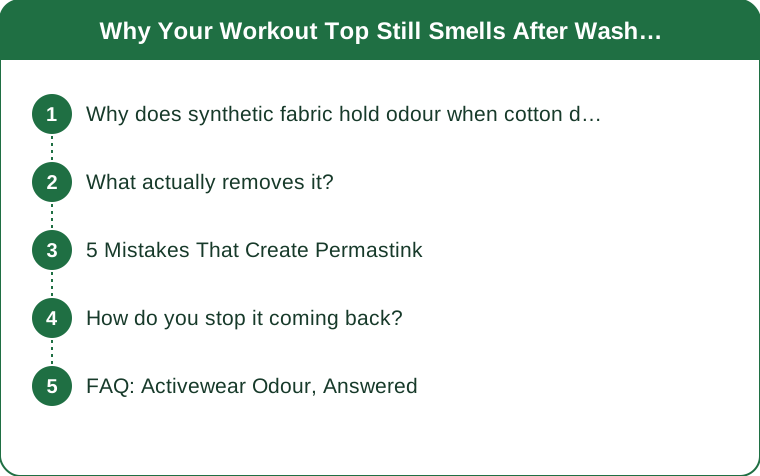
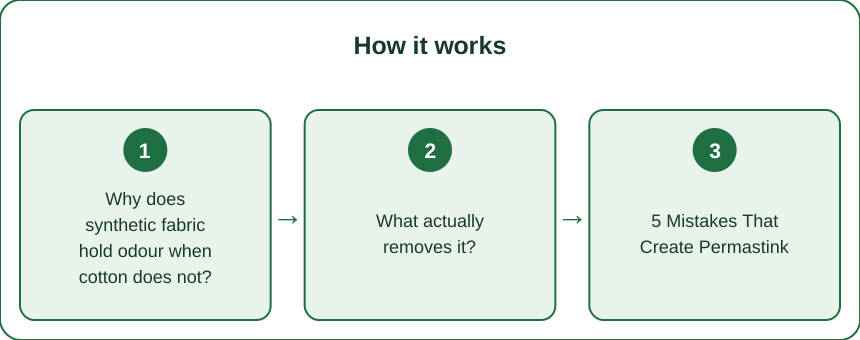
Why does synthetic fabric hold odour when cotton does not?
Polyester is hydrophobic and oleophilic - it repels water and attracts oil. Your sebum and skin oils migrate into the fibre rather than sitting on the surface, and that is where the odour compounds live.
Cotton behaves in the opposite way. It absorbs water readily, so a normal wash cycle actually reaches the soiling and carries it away. Synthetics repel the very thing you are trying to clean them with.
Bacteria feed on the trapped oils. The smell is not the sweat itself - fresh sweat is essentially odourless - it is the byproducts of bacteria metabolising oils and proteins left behind in the fabric.
Cold washes make it considerably worse. Oils do not emulsify properly below roughly 30C, so a cold cycle leaves the food source in place even when the top comes out smelling of detergent.
The odour is masked, not removed. Detergent fragrance sits on top of the problem, and body heat plus moisture releases the underlying compounds within minutes of you starting to move.
Antimicrobial finishes wear off. Many tops ship with a silver or similar treatment that degrades over roughly 20 to 50 washes, which is exactly when people notice a previously fine top has turned.
And excess detergent is part of the trap. Undissolved detergent builds up in the fibre and holds oils against it, so the more you pour in, the worse the problem gets.
What actually removes it?
Soak before you wash - this is the step that works. 30 to 60 minutes in cool water with 250 ml of white vinegar breaks the bond between the oils and the fibre. Vinegar goes in the soak, never in the same step as detergent.
Or use an oxygen bleach soak for stubborn cases. A sodium percarbonate powder in warm water for 1 to 4 hours is more aggressive than vinegar and safe for most synthetics - check the care label first.
Then wash warm, at around 40C. This is the single most common fix people skip. Cold cycles cannot emulsify body oil, and 40C is well within the tolerance of almost all activewear.
Use roughly half the detergent you think you need. Activewear is lightly soiled in weight terms, and excess detergent is a cause of odour rather than a cure.
Never use fabric softener. It deposits a waxy coating that traps oils and destroys wicking, which makes both the smell and the performance worse permanently.
Wash inside out. The odour lives on the side that touched your skin, so turning the garment gives the water direct access to it.
Air dry, ideally in sunlight. Tumble drying bakes any residual odour into the fibre, while UV has a genuine deodorising effect and costs nothing.
And consider a dedicated sports detergent if the problem is chronic. They contain enzymes aimed at body oils rather than food and grass stains.

5 Mistakes That Create Permastink
1. Leaving kit in the gym bag. A damp top in a sealed bag for six hours is a bacterial incubator. Airing it over a chair on the way to the wash makes more difference than any detergent choice.
2. Washing everything cold, always. Cold is right for wool and delicates and wrong for oily synthetic soiling. 40C solves what no amount of cold cycling will.
3. Using more detergent because it smells bad. Backwards. Residue holds oil in the fibre, so heavy doses actively feed the problem you are trying to solve.
4. Adding fabric softener to make it nicer. It coats the fibre, kills the wicking you paid for, and locks odour in. This one is genuinely irreversible on some fabrics.
5. Overstuffing the machine. Clothes need room to move for water and detergent to circulate. A packed drum washes nothing properly, and activewear is the first thing to show it.
The pattern is treating activewear like cotton. It is a different material with different chemistry, and the third mistake surprises even people who are otherwise meticulous about laundry - more detergent is the instinct, and it is the wrong one every time.
How do you stop it coming back?
Air the top immediately after training. Five minutes of hanging it up rather than balling it into a bag prevents most of what you would otherwise be washing out.
Wash within 24 hours where you can. The longer damp fabric sits, the further the oils migrate into the fibre and the harder they are to shift.
Do a vinegar soak monthly as maintenance, not only as a rescue. It stops the gradual buildup that turns a good top into a problem at month eight.
Rotate your tops. Wearing the same two on repeat gives them no drying and recovery time and concentrates the wear.
Skip the dryer as a standing habit. Heat shortens the life of elastane and sets any residual odour you did not fully remove.
Deep clean the machine itself. A washer with its own biofilm re-deposits odour on everything. A hot empty cycle monthly, and wipe the door seal.
And accept that some tops are past saving. Once antimicrobial finish is gone and oils are deeply set, a heavy oxygen bleach soak is the last attempt - after that it becomes a decorating shirt.
FAQ: Activewear Odour, Answered
Why do my clothes smell clean until I start sweating?
Because detergent fragrance masks odour compounds that are still bound inside the fibre. Body heat and moisture release them within minutes of you warming up.
Does vinegar or baking soda work better?
Vinegar, used as a 30 to 60 minute pre-soak with about 250 ml in cool water. Use it in the soak only - not mixed with detergent, and not with bleach.
What temperature should I wash activewear at?
Around 40C. Cold water cannot emulsify body oils, and 40C is within the care tolerance of almost all synthetic activewear. Check the label for anything with heavy elastane content.
Can I use fabric softener on gym clothes?
No. It leaves a waxy coating that traps oils, destroys moisture wicking, and makes odour permanently worse.
How much detergent should I use?
About half the standard dose. Activewear is lightly soiled by weight, and detergent residue in the fibre holds oil against it.
Does sunlight actually help?
Yes - UV has a real deodorising effect, and air drying avoids baking residual odour in the way a tumble dryer does.
Is a smelly top ever unrecoverable?
Sometimes. Once the antimicrobial finish has worn off and oils are deeply set, an oxygen bleach soak of 1 to 4 hours is the final attempt. If that fails, it is finished as gym kit.
TL;DR:
- Polyester attracts oil and repels water - the odour lives inside the fibre where cold water never reaches it.
- Soak first: 30 to 60 minutes, 250 ml white vinegar, cool water, no detergent in the same step.
- Wash at around 40C. Cold cycles cannot emulsify body oils - this is the step most people are missing.
- Halve the detergent. Residue traps oil and makes it worse.
- Never use fabric softener - it coats the fibre, kills wicking, and locks odour in for good.
- Wash inside out, air dry, sunlight if possible. Tumble drying bakes odour in.
- Air kit immediately after training instead of sealing it in a bag - this prevents more than any wash fixes.
- Clean the machine monthly with a hot empty cycle, and wipe the door seal.
See It in Motion
Seen here: Racerback Tank Top - White — shop similar styles on bubblelime.com
Keep Reading
This article is for general informational and styling purposes only. Fit, sizing, and product availability may vary.