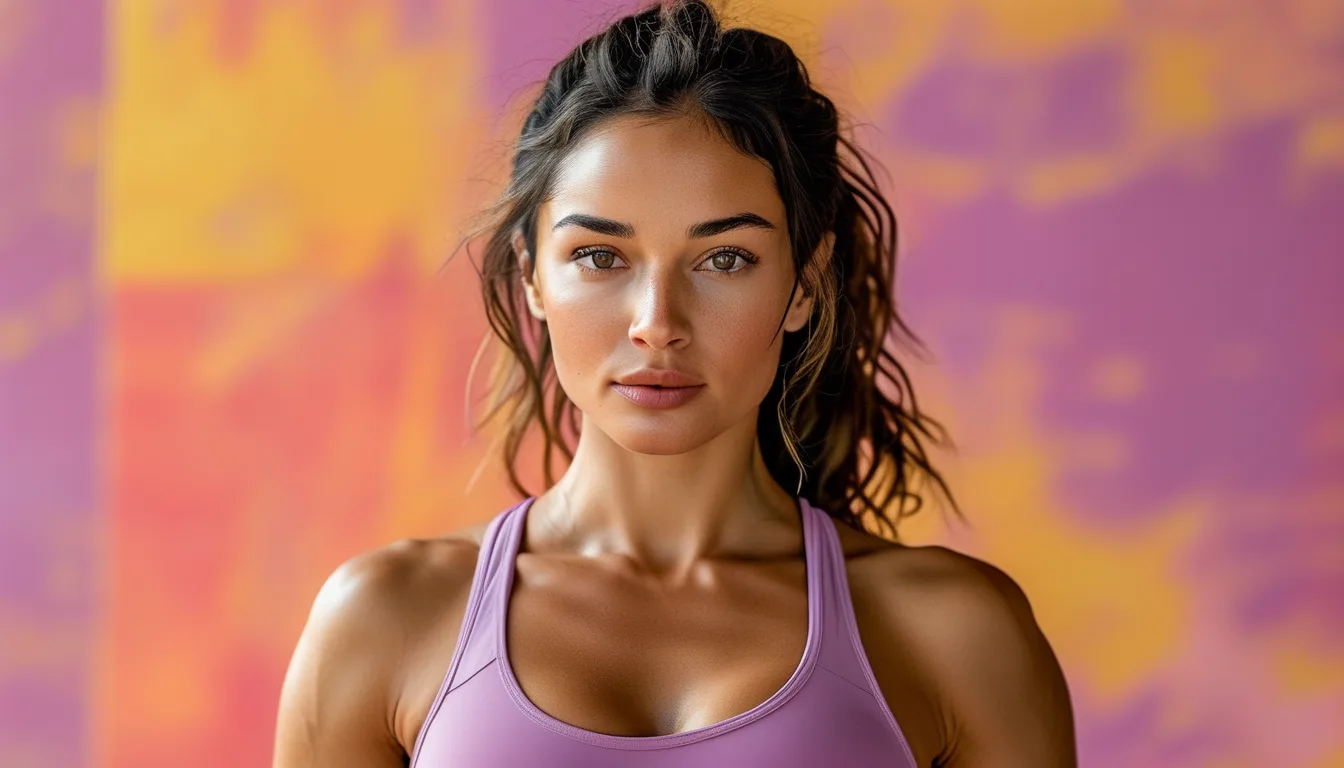
Workout Tops That Hide Sweat Marks: The Color and Fabric Cheat Sheet
Quick Answer: Sweat marks are a contrast game: fabric darkens where it is wet, so the colors that hide sweat are the ones where wet and dry look most alike — true black, navy, white, and very light pastels — while mid-tones, especially heather gray, broadcast every drop. Fabric decides the second half: quick-drying polyester blends spread and evaporate moisture before patches form, cotton holds water and displays it, and patterns break up whatever outline remains. Fit and care close the loop — a skim fit and softener-free washing keep wicking fabrics actually wicking.
The gym is not judging your sweat. But if you would rather keep it classified, wear the right camouflage.
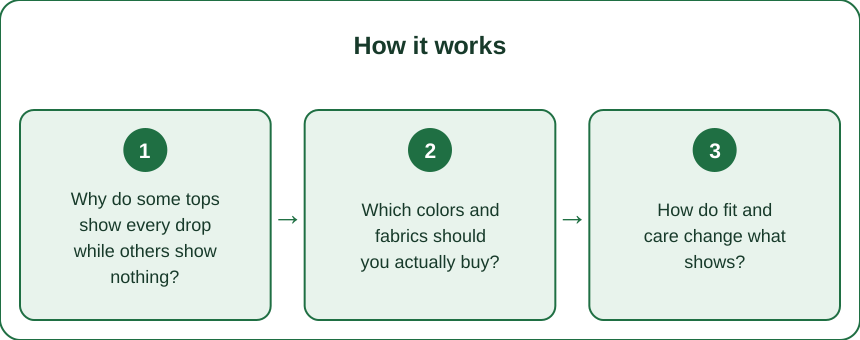
Why do some tops show every drop while others show nothing?
Contrast, absorption, and drying speed — three variables you can read off a hang tag.
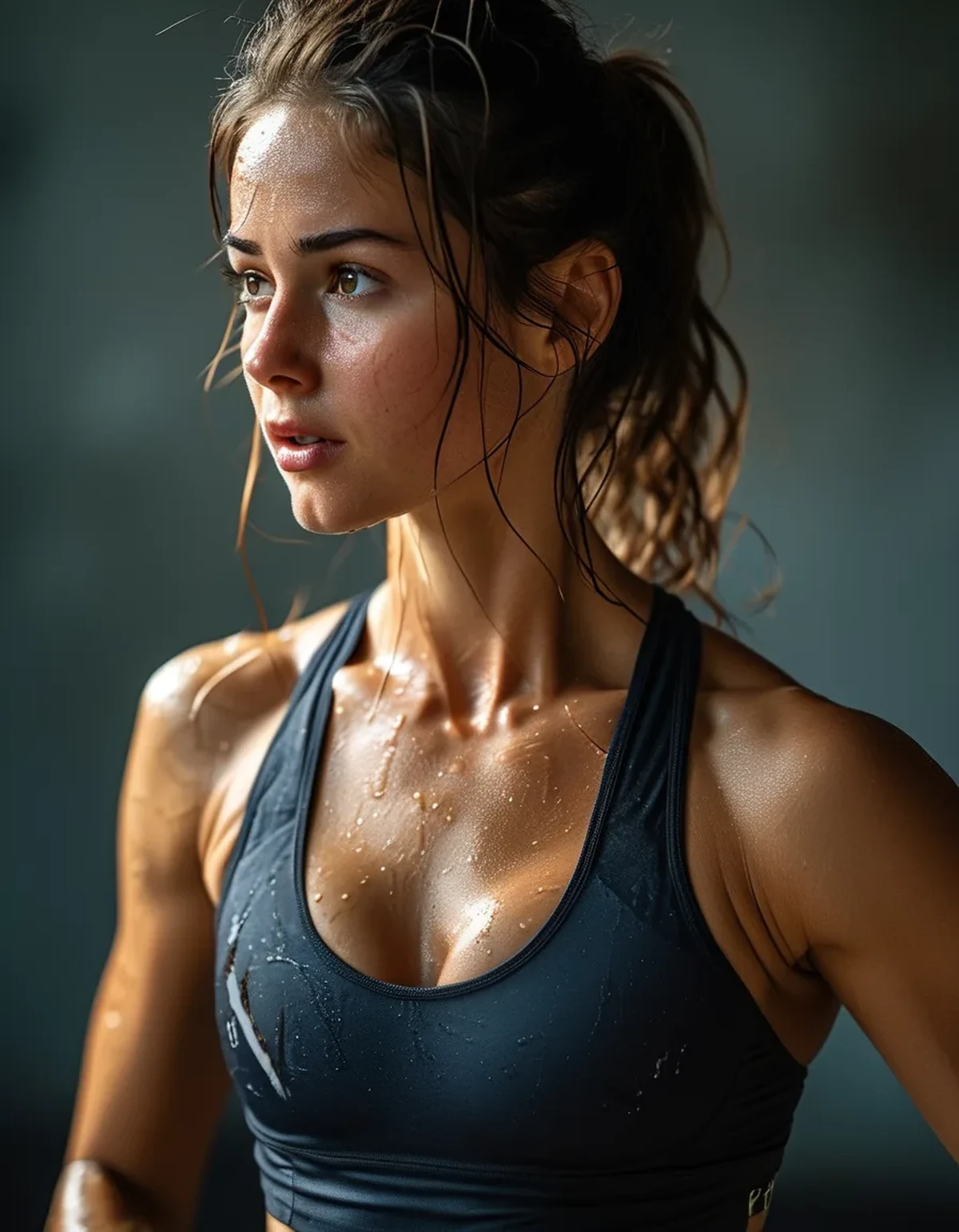
A sweat mark is just wet fabric photographing darker. Moisture fills the spaces between fibers, changes how light passes and reflects, and the fabric appears a shade or three deeper. The visibility of the mark equals the visual distance between wet and dry versions of that exact color — which is why the same workout produces a broadcast on one shirt and nothing on another.
Mid-tones maximize that distance. Heather gray, light blue, sage, dusty rose, tan — colors with room to darken noticeably — sit at the visibility peak. Heather gray is the worst case in the entire wardrobe: its marled texture makes the wet-dry boundary crisp and unmistakable, which is how the gym’s most popular color became its most revealing.
The extremes barely move. True black and the deepest navys are already so dark that wet reads nearly identical. White and near-white have almost no darker to go. Both ends hide what the middle displays.
Fiber decides how much water sits in the fabric at all. Cotton absorbs many times its weight and holds it against the surface — a cotton tee in a spin class becomes a literal map. Polyester and nylon absorb very little; performance knits move moisture along the fibers and spread it thin, so it evaporates before it pools into a defined patch. Spread-and-dry is the entire trick of wicking fabric.
And texture scatters the evidence. Patterns, marled-but-dark knits, and textured weaves break up the outline of any damp zone, while smooth flat solids give a mark clean edges to be seen by.
Which colors and fabrics should you actually buy?
Build the sweat-day shelf from both ends of the color scale, in quick-dry knits, with patterns as the wildcard.
The safe list, in order of reliability:
True black — the unbeatable default; wet is invisible, and it hides everything else too.
Deep navy, charcoal-verging-on-black, espresso, forest — the dark family works as long as it is genuinely dark; charcoal that leans mid-gray starts leaking information.
White and barely-there pastels — the surprise performers; with nowhere darker to go, they stay discreet even soaked. The caveat is sheerness: thin white knits over dark sports bras disclose differently, so weight matters.
Patterns and prints of any tone — florals, camo, space-dye, marble prints — scatter the wet-dry boundary so effectively that even mid-tone prints outperform their solid twins by a wide margin.
The avoid-on-hard-days list: heather gray above all, then solid light-mid blues, sage, mauve, taupe, and any smooth solid living between light and dark.
Fabric rules that outrank color: look for lightweight polyester or poly-nylon performance knits — the hang tag saying moisture-wicking or quick-dry — over cotton and heavy cotton blends for anything sweaty. Thinner dries faster than thicker; mesh zones under arms and across the back are functional, not decorative.
Match the top to the session, not the aesthetic calendar: cotton and mid-tones are wonderful for strength days, walks, and coffee-adjacent errands where sweat stays modest; interval days, hot yoga, and August runs get the black-white-print quick-dry shelf. Owning four dedicated sweat-day tops solves the entire topic for under the price of one legging.
How do fit and care change what shows?
A skim fit and a softener-free wash preserve everything the fabric promised.
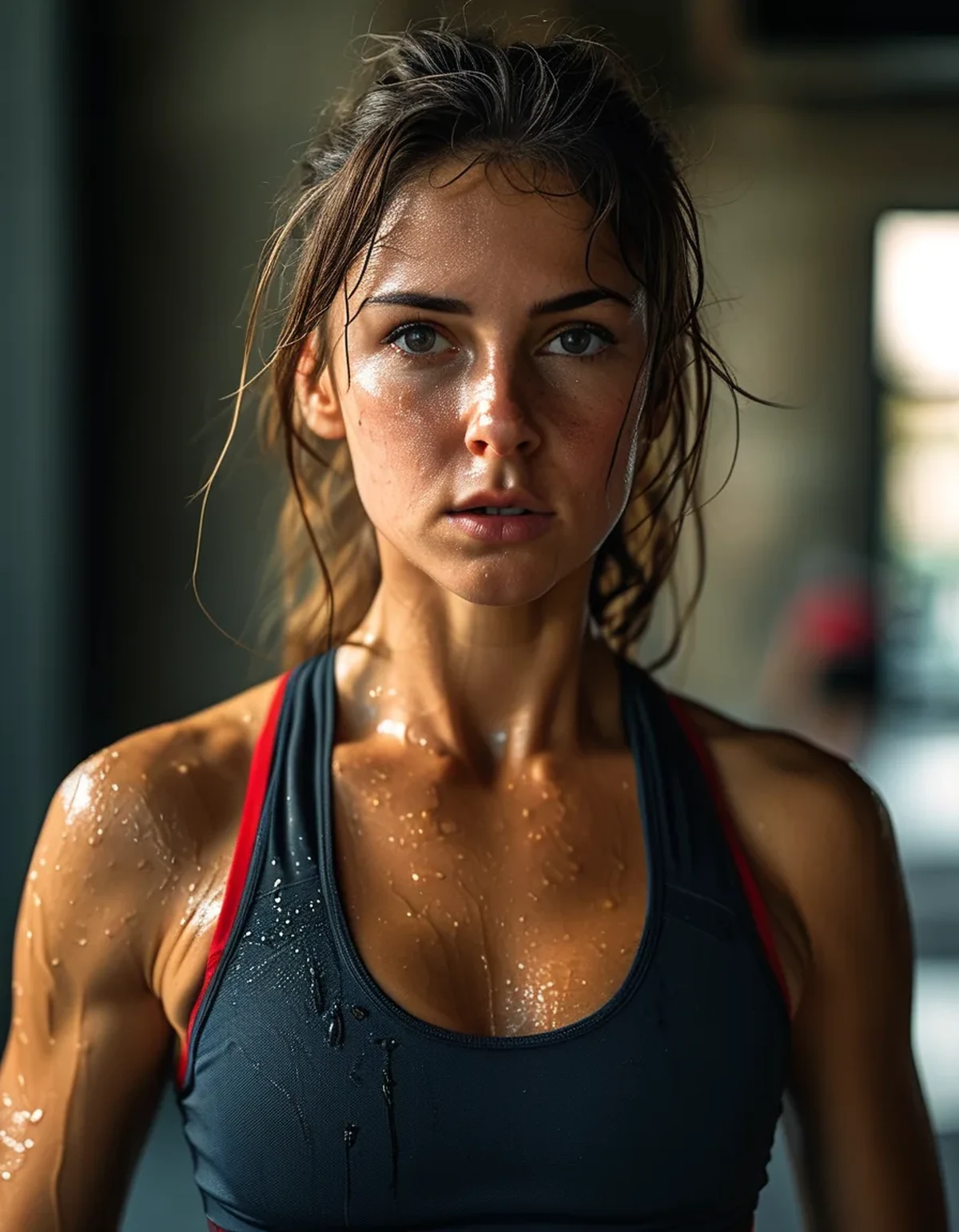
Fit decides where moisture meets fabric. A skim fit — close but not compressed — touches lightly and lets air move, so moisture spreads and evaporates on schedule. A tight top pressed against damp skin saturates in place, printing defined patches exactly where it clings; an oversized cotton tee swings against you, wet-spotting wherever it lands. Skim beats both directions.
Underlayers are part of the system. A wicking sports bra handles the highest-output zone first; a top worn over a soaked cotton bra inherits the problem from below. On the sheerness front, light tops over light bras keep white viable.
Now the care part almost nobody connects to sweat marks:
Fabric softener is the number-one wicking killer. It coats synthetic fibers with a waxy film that blocks the moisture-spreading the fabric was engineered for — a few softened washes turn a quick-dry top into a slow-dry one that patches like cotton. No softener on activewear, ever; dryer sheets count.
Detergent buildup does the same in slow motion. Overdosing detergent leaves residue in tight knits. Normal doses, cold water, and an occasional plain hot-water rinse cycle (fabric permitting) keep the knit open and moving moisture.
Skip the dryer for the usual reasons plus this one: heat degrades the elastane and can set in body oils that change how fabric wets. Air-dried performance tops stay performance tops longer.
Rotate honestly. A top re-worn before fully drying starts the session pre-loaded with yesterday’s moisture and salt — faster to patch, and the salt rings on dark colors are their own show-and-tell.
Same logic extends downward, incidentally: dark, wicking leggings keep lower-body sweat as private as the top half.
5 Mistakes That Put Your Sweat on Display
1. Heather gray on interval day. The most popular gym color is the single most revealing one — crisp wet-dry edges on a marled mid-tone. Save gray for strength days and errands; give sprints to black, white, or a print.
2. Trusting the word athletic instead of the fiber content. Plenty of athleisure tops are mostly cotton wearing a sporty cut. If the tag reads over half cotton, it will hold and display water no matter how technical it looks on the rack.
3. Washing performance tops with fabric softener. One habit quietly converts your entire quick-dry shelf into slow-dry cotton behavior. If your wicking tops stopped wicking, this is almost always why — strip-wash them plain and hot once, then never soften again.
4. Sizing down for compression on cardio days. Fabric pressed hard against sweating skin saturates in place and prints patches with sharp outlines. Compression has its uses; sweat concealment is the opposite of one.
5. The soaked-top encore. Re-wearing yesterday’s not-quite-dry top means starting damp and salted — patches arrive in the warm-up, and dried salt rings on dark fabric tell the story anyway. Full dry plus a real wash between wears.
FAQ: Sweat Mark Questions, Answered
What is the single best color for hiding sweat?
True black, with deep navy a close second. Both are dark enough that wet fabric reads nearly identical to dry. White and very pale pastels are the counterintuitive runners-up — they have almost no darker shade to turn.
Why does my gray shirt show sweat when my black one doesn’t?
Because visibility is the contrast between wet and dry fabric, and mid-tones like gray have maximum room to darken. Black is already at the bottom of its range; gray broadcasts every stage of the journey.
Do moisture-wicking tops really make a difference?
Yes — synthetics absorb far less water than cotton and spread what they take across the knit so it evaporates before forming patches. The effect is real but conditional: softener residue or a soaked cotton bra underneath can defeat an otherwise excellent top.
Are anti-sweat undershirts or dress shields worth it for workouts?
For the gym, generally no — a proper wicking top plus smart color choice solves it with less bulk and heat. Sweat-guard layers earn their place under office clothes, where the outer fabric cannot be a performance knit.
TL;DR:
- Sweat marks are wet-dry contrast: mid-tones (worst: heather gray) display everything; true black, deep navy, white, pale pastels, and prints hide it.
- Fiber does the other half — quick-dry poly blends spread and evaporate moisture; cotton stores and shows it.
- Skim fit beats tight and oversized, and a wicking sports bra underneath protects the top from below.
- Never use fabric softener on activewear — it coats fibers and turns quick-dry tops into patch-prone ones.
Sort your drawer into sweat-day and easy-day shelves tonight — four dark or printed quick-dry tops on the first shelf ends this problem permanently.
See It in Motion
Seen here: Crewneck Short Sleeve Workout T-Shirt — shop it on bubblelime.com
Keep Reading
This article is for general informational and styling purposes only. Fit, sizing, and product availability may vary.