Why Your Workout Tops Smell Bad Even After Washing — and the Fix
Quick Answer: Fabric softener and standard detergent both coat synthetic performance fibers with residue that traps bacteria — the exact bacteria causing the smell. Skip softener entirely, wash in cold with half the normal detergent dose, and add a quarter cup of white vinegar to the rinse cycle to strip built-up residue.
You pulled the top straight from a clean laundry cycle and it still smells faintly sour the second you sweat in it. That’s not a hygiene failure — it’s a residue buildup problem specific to synthetic performance fabric, and it has a fast, cheap fix.
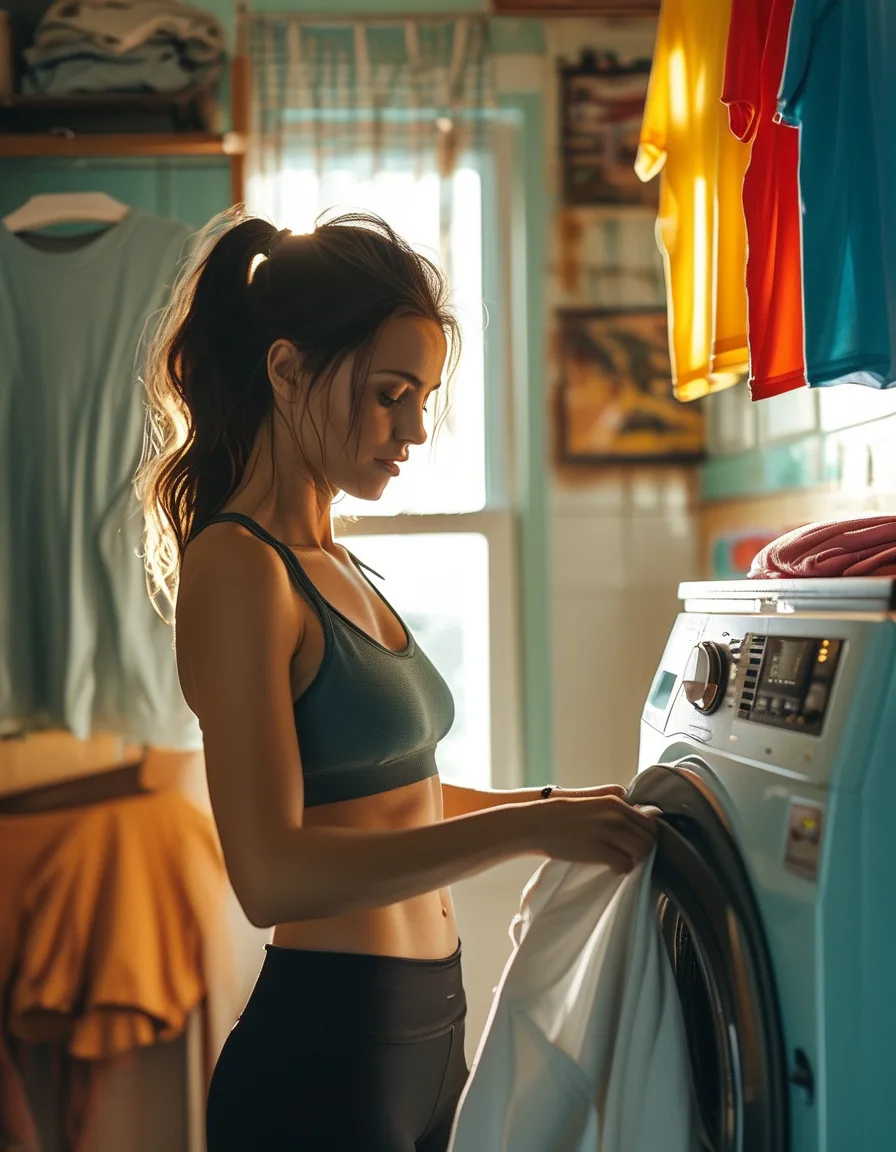
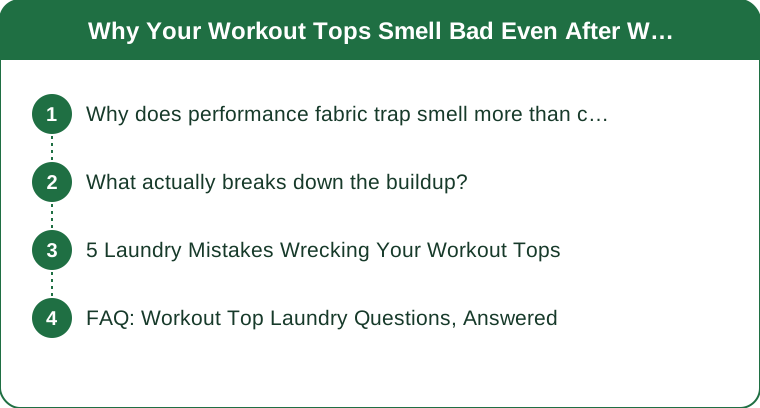
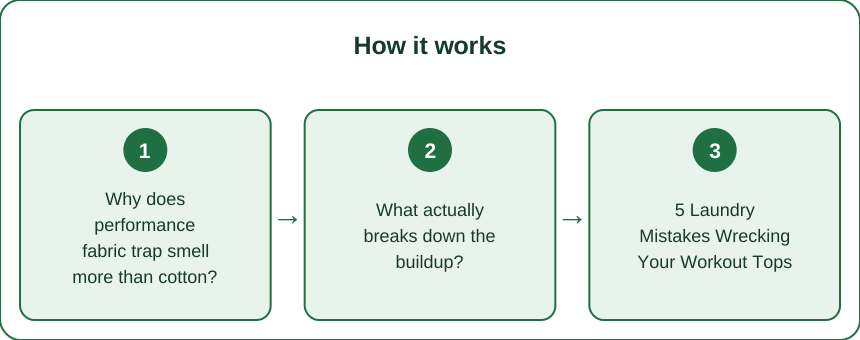
Why does performance fabric trap smell more than cotton?
Synthetic fibers like polyester and nylon have a different structure than cotton — they’re smoother and more hydrophobic, which means odor-causing bacteria bind to the fiber surface itself rather than washing away easily. Add fabric softener, which coats fibers in a waxy layer to make them feel soft, and you’ve sealed a thin bacterial layer right into the fabric.
That residue builds cycle after cycle. Even a fresh wash just wets the existing bacterial layer instead of removing it — which is exactly why the smell can return within minutes of putting the top on.
What actually breaks down the buildup?
Skip fabric softener completely on any performance piece — no exceptions, it’s the single biggest contributor to trapped odor. Wash in cold water (heat can set some odor-causing residues rather than lift them) with about half your usual detergent dose, since synthetic fibers need less soap to get clean and excess detergent itself can build up.
Add a quarter cup of white vinegar to the rinse cycle every 4-6 washes — it’s mildly acidic enough to break down bacterial residue and mineral buildup without damaging elastic or fibers.

5 Laundry Mistakes Wrecking Your Workout Tops
1. Using fabric softener. Seals bacteria into the fabric — the single worst habit for smell.
2. Washing in hot water. Can set odor and breaks down elastic fibers faster over time.
3. Letting sweaty tops sit in a gym bag for hours. Bacteria multiplies fast in a warm, damp, enclosed bag — rinse or hang-dry before tossing in the hamper if you can’t wash same-day.
4. Overloading the washer. Tops need room to actually agitate against water and detergent, not just sit pressed against other clothes.
5. Machine drying on high heat. Speeds elastic breakdown; air-dry or low heat extends the garment’s life significantly.
FAQ: Workout Top Laundry Questions, Answered
How often should I deep-clean workout tops with vinegar?
Every 4-6 regular washes is enough for maintenance. If a top already smells persistently, do one vinegar soak (30 minutes, quarter cup in a basin of water) before rewashing normally.
Is it okay to rewear a workout top without washing if it’s not sweaty?
A light, brief wear with minimal sweat is generally fine once — bacteria needs moisture and time to build up meaningfully.
Do odor-resistant fabrics actually stay smell-free longer?
Silver-ion or antimicrobial-treated fabrics do measurably resist odor longer, but the same softener and hot-water mistakes will degrade that treatment early — proper washing still matters most.
TL;DR:
- Fabric softener seals bacteria into synthetic fibers — the #1 cause of lingering smell
- Cold wash, half detergent dose, quarter cup vinegar in rinse every 4-6 washes
- Never let sweaty tops sit in a closed gym bag for hours
- Air-dry or low heat — high heat breaks down elastic and can set odor
The fix costs nothing extra — it’s about removing a step, not adding one.
See It in Motion
Seen here: UPF 50+ Short Sleeve Rashguard Swim Shirt — shop it on bubblelime.com
Keep Reading
This article is for general informational and styling purposes only. Fit, sizing, and product availability may vary.